ReCircle, a marketplace shipped in three sprints
For our CSUF senior project, five of us built a community marketplace for second-hand goods. I was the Scrum Master, and built the workflows behind the app.
- Role
- Scrum Master and workflow developer
- When
- Spring 2025 · ISDS 454 senior project
- Team
- Product Owner, Scrum Master, UI/UX developer, database developer, app tester
- Built on
- Bubble.io · Stripe · Trello

- 3 sprintseach ending in a working incrementfrom sign-up to a completed purchase
- 100%of the sprint backlog deliveredon schedule, with nothing carried past Sprint 3
Three sprints, one product goal
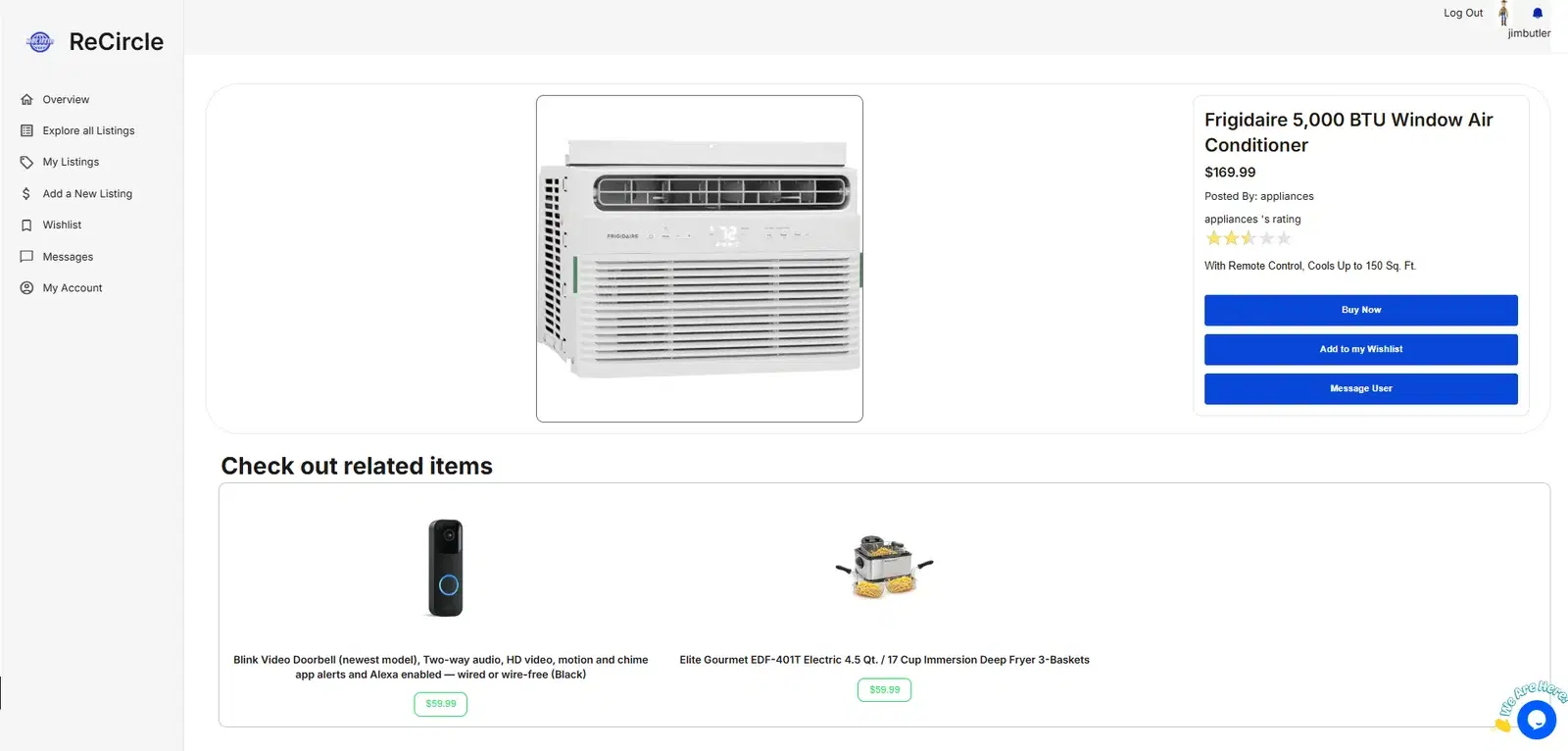
The backlog was written as user stories: as a seller, I want to post and edit listings, so I can manage my items for sale. Each sprint took a focused slice of it.
- Sprint 1
The foundation
Accounts and login, listing creation, and search with filters. Real listings gave every later feature data to work with.
- Sprint 2
Buying and talking
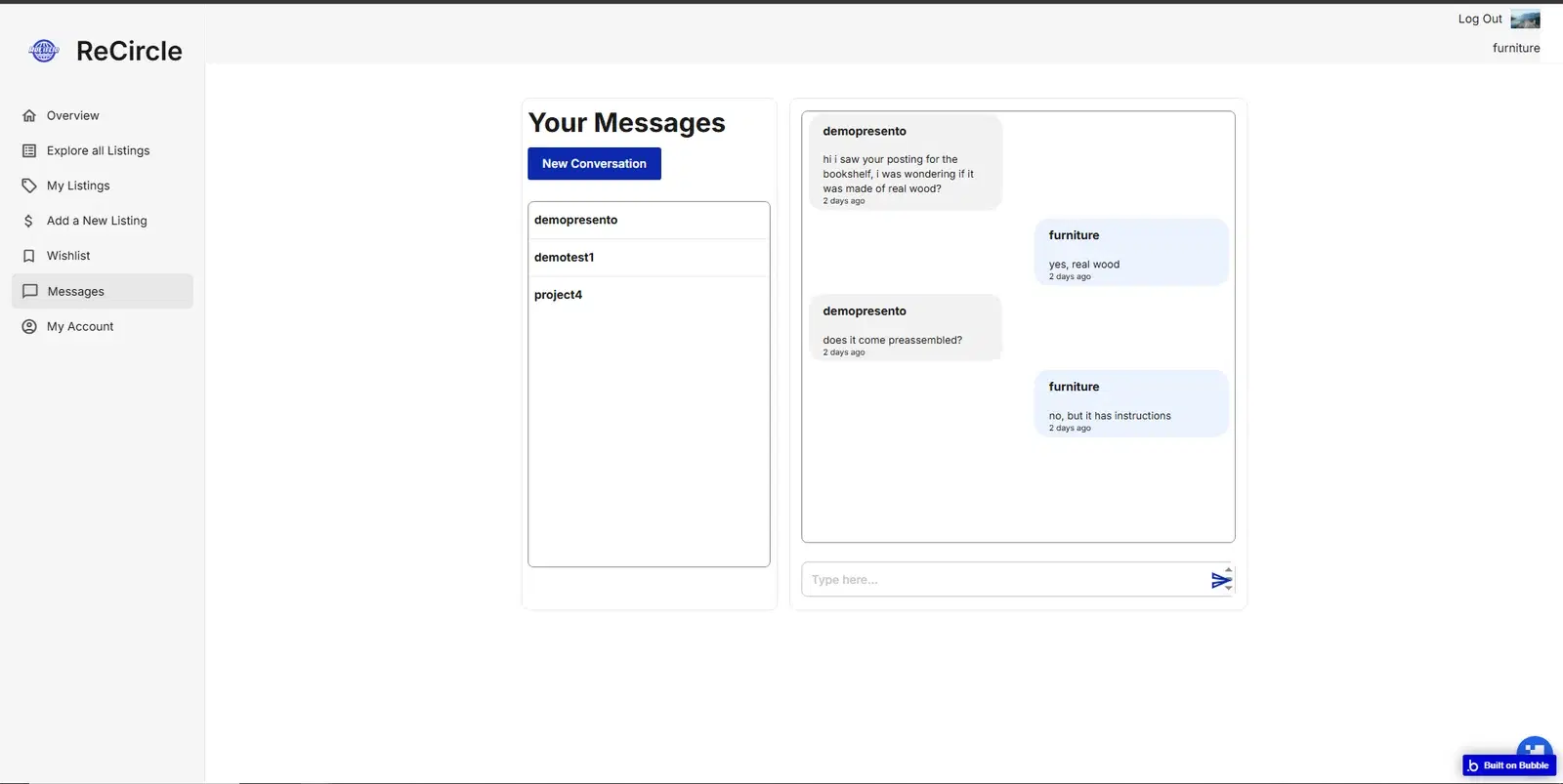
Wishlists, Stripe payments, and messaging between buyers and sellers to coordinate a sale.
- Sprint 3
Trust
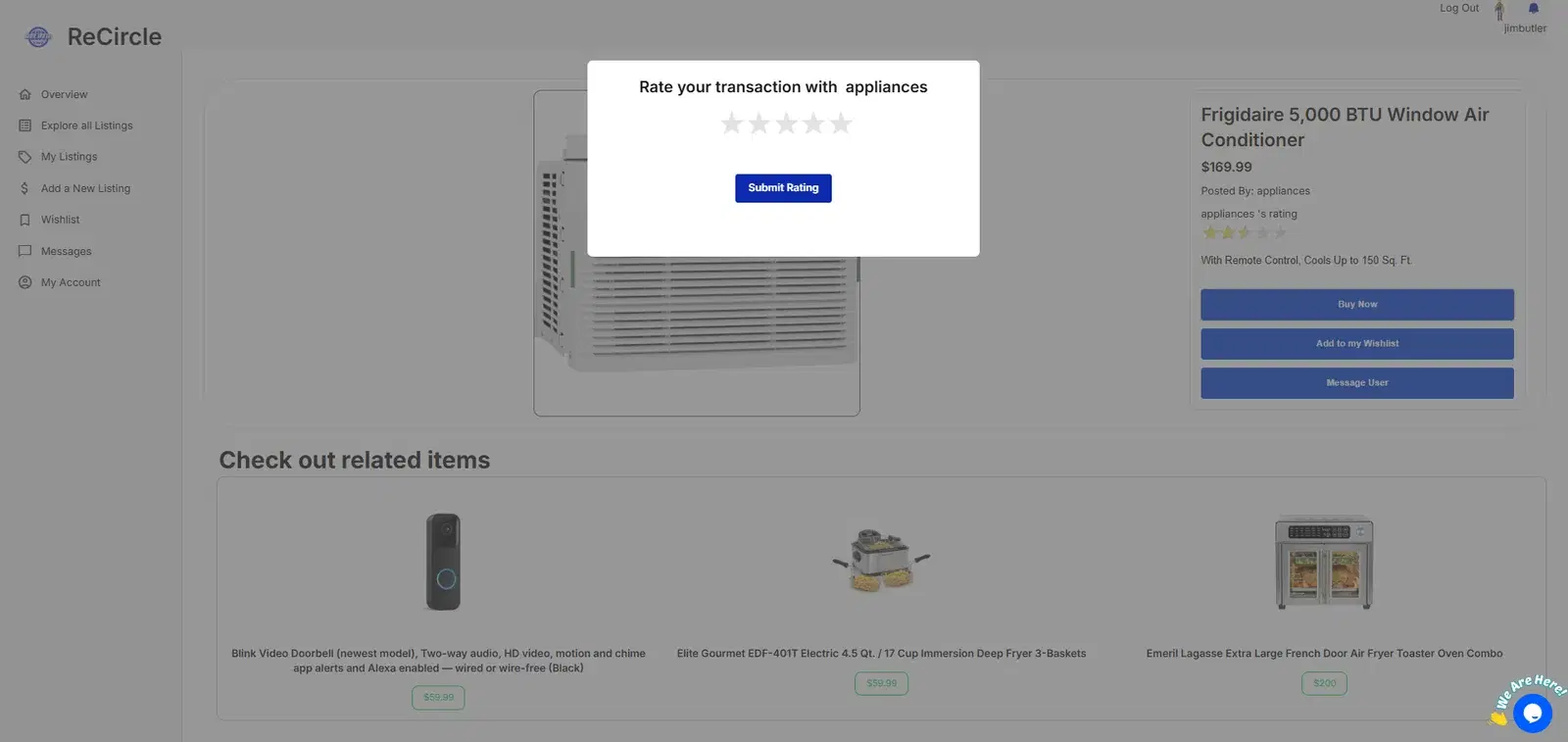
Seller ratings, editable listings, and a notification when an item sells so the seller can ship it.
Designed before it was built
The data flow diagram maps how search, login, payments, messages, and notifications move data between users, the system, and Stripe. The entity relationship diagram lays out the six tables behind it: users, products, payments, conversations, messages, and notifications.
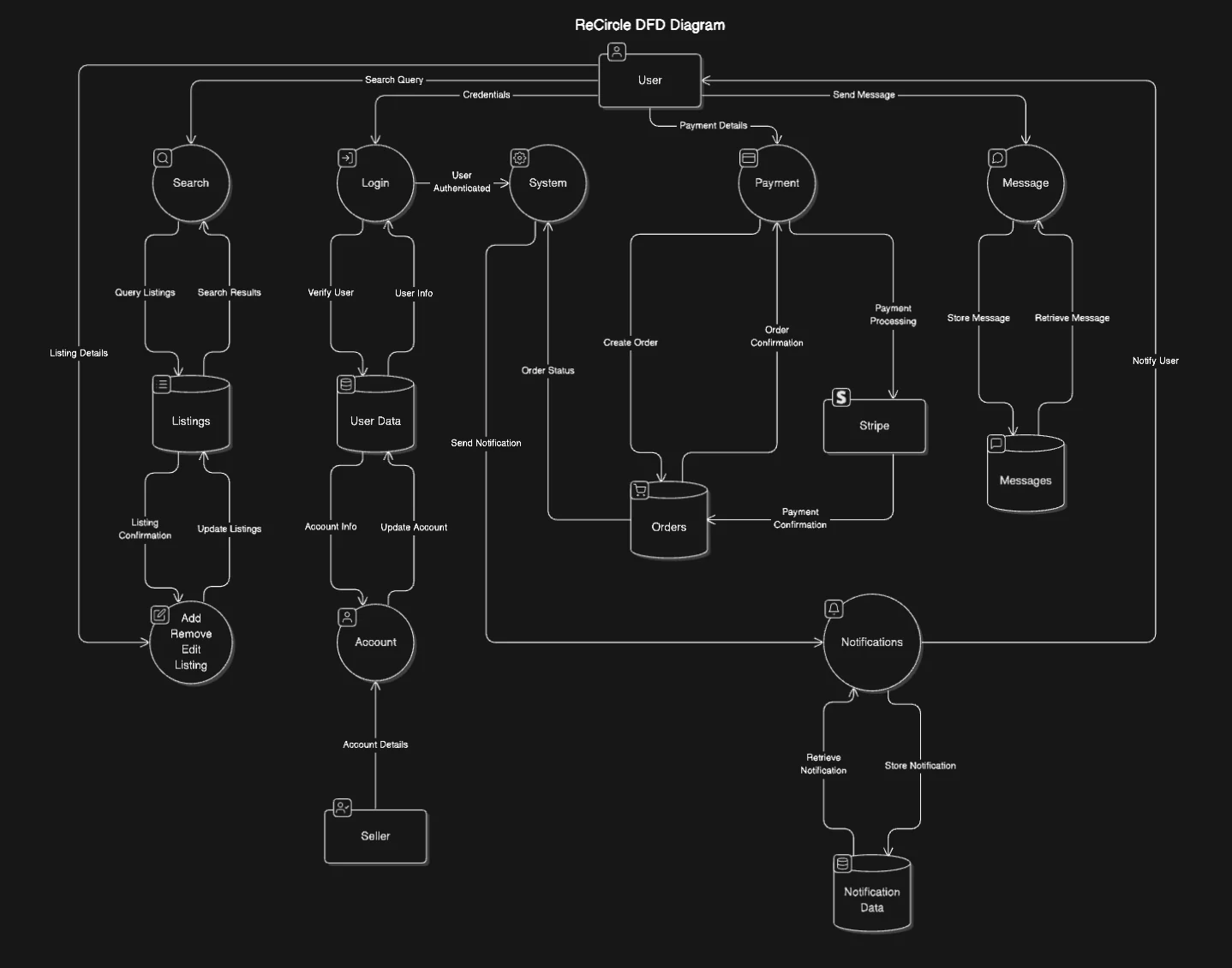
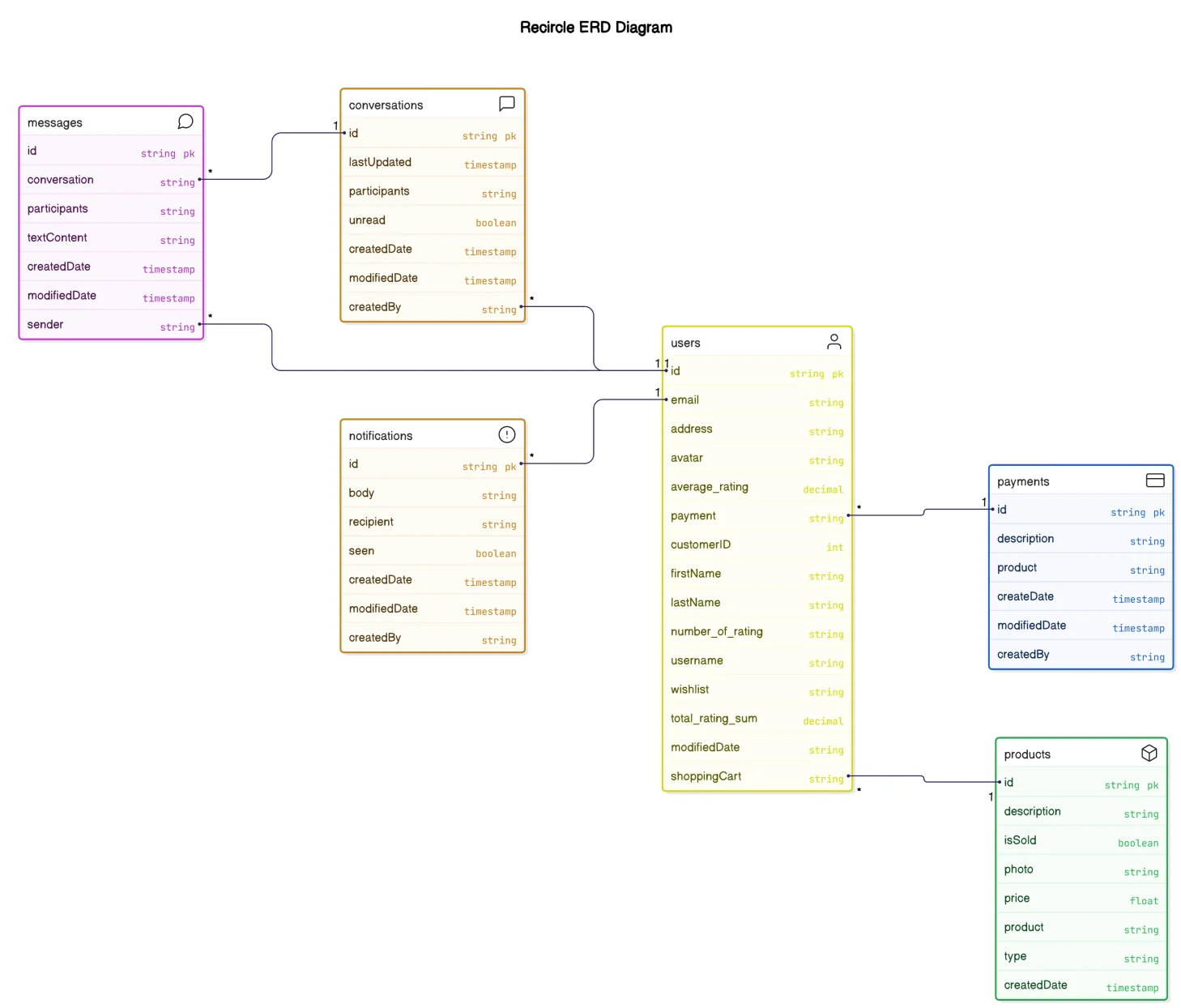
Data flow diagram and entity relationship diagram. Open either full size.
The product
By Sprint 3, a buyer could go from sign-up to a completed purchase: browse, save to a wishlist, message the seller, pay with Stripe, and rate the transaction. Built on Bubble.io, using its AI tools to streamline the workflows behind ratings and notifications.
How we ran it
Sprint planning, six daily scrums per sprint, a sprint review, and a retrospective, every sprint.
Everything visible
Every artifact lived on a shared Trello board, and scheduling conflicts were raised the moment they came up.
A stricter Definition of Done
Each sprint planning tightened what counted as done, so increments kept getting more reliable.
Scope held in check
From Sprint 2, overlapping features were condensed into single user stories, and the plan was scaled down whenever scope crept.
The stakeholder in the loop
Sprint reviews with our professor, the key stakeholder, fed changing requirements straight back into the backlog.
My role
- Served as Scrum Master: led sprint planning, the daily scrums, sprint reviews, and retrospectives.
- Built the app's workflows: API integrations and the create, read, update, and delete operations behind listings and accounts.
- Pushed the team to use Bubble's AI tools, which shaped how ratings and notifications work.